Best Anti Inflammatory Food To Prevent Stomach Issues Per Season
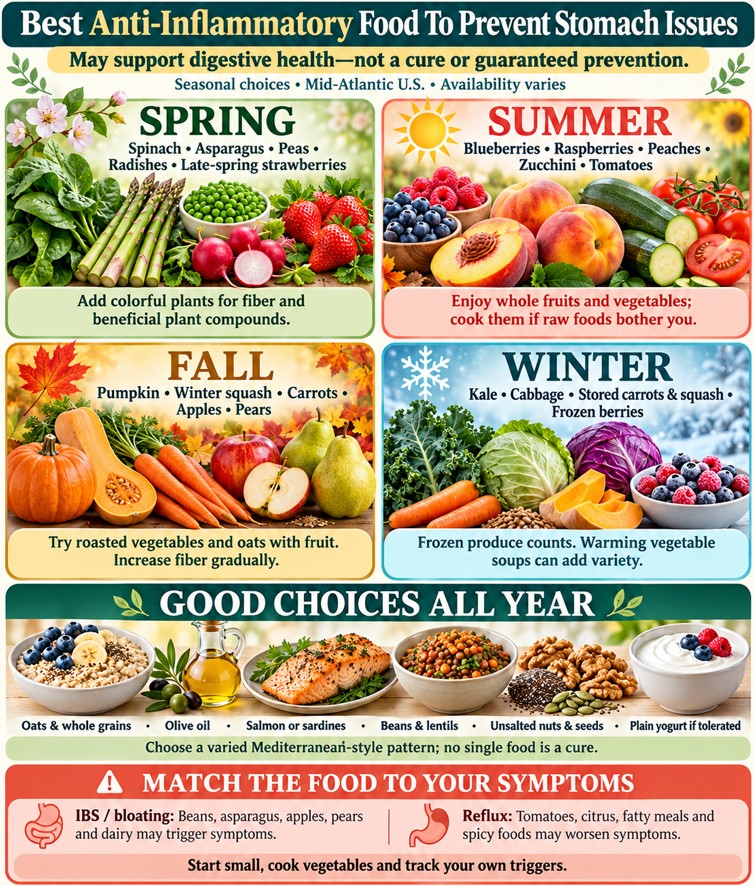
Anti-inflammatory eating may support digestive health, but it cannot prevent every stomach problem. A Mediterranean-style pattern—vegetables, fruits, whole grains, beans, nuts, fish and olive oil—may help reduce chronic inflammation. However, gastritis, ulcers, reflux and IBS have different causes and need different approaches. Food does not replace treatment for conditions such as H. pylori infection. Harvard Health
There is no single “best” food or exhaustive prevention list. These are practical seasonal choices for Maryland and the Mid-Atlantic U.S.; harvest timing varies, and frozen produce works year-round.
| Season | Foods to include | Simple meal idea |
|---|---|---|
| Spring | Spinach, asparagus, peas, radishes, leafy greens, late-spring strawberries | Cooked greens with brown rice and fish or tofu |
| Summer | Blueberries, raspberries, peaches, zucchini, green beans, tomatoes | Grilled fish with zucchini and a small serving of berries |
| Fall | Pumpkin, winter squash, carrots, sweet potatoes, apples, pears | Roasted squash with lentils, or oatmeal with cooked fruit |
| Winter | Kale, cabbage, stored carrots and squash, frozen berries and vegetables | Vegetable soup with barley or brown rice |
Good choices in every season: oats, whole grains, extra virgin olive oil, salmon or sardines, beans and lentils, unsalted nuts and seeds, and plain yogurt if tolerated. The overall eating pattern matters more than any individual ingredient. Harvard Health
More detailed for all USA Best Anti-Inflammatory Food to Prevent Stomach Issues Per Season
season-by-season guide to anti-inflammatory foods that tend to be gentle on the gut. Since it’s November, fall comes first.
Fall (now)
- Pumpkin and butternut squash: soft, cooked fiber that’s easy on digestion, plus beta-carotene.
- Ginger: well studied for nausea and sluggish digestion. Try it as tea or grated into soups.
- Cooked apples and pears: the pectin feeds beneficial gut bacteria. Cooking makes them gentler than raw.
- Sweet potatoes: anti-inflammatory carotenoids and fermentable fiber.
Winter
- Bone broth or vegetable broth: soothing and hydrating, and a good base for easy-to-digest meals.
- Fermented foods (plain yogurt, kefir, sauerkraut): probiotics support the gut lining. Start small if you’re prone to bloating.
- Carrots, parsnips, and other cooked root vegetables: gentle fiber.
- Oats: beta-glucan fiber that calms digestion and supports a healthy microbiome.
- Citrus (oranges, clementines): vitamin C, though go easy if you have acid reflux.
Spring
- Leafy greens (spinach, arugula, dandelion greens): polyphenols and magnesium. Lightly cook them if raw greens bother you.
- Asparagus: prebiotic inulin that feeds good gut bacteria.
- Peas and artichokes: more prebiotic fiber but introduce them gradually since they can cause gas.
- Peppermint and chamomile tea: both can ease cramping and bloating.
Summer
- Berries (blueberries, strawberries, raspberries): high in anthocyanins, among the most studied anti-inflammatory compounds.
- Cucumber and watermelon: hydrating and mild.
- Zucchini and summer squash: low in irritants and easy to digest.
- Fresh herbs (basil, mint, parsley): mild anti-inflammatory and digestive benefits.
Year-round staples
- Fatty fish (salmon, sardines): omega-3s.
- Extra virgin olive oil: oleocanthal has anti-inflammatory effects.
- Turmeric (with black pepper): curcumin is absorbed better with piperine.
- Plenty of water, which matters as much as any single food.
Practical notes
- Seasonal eating isn’t a medical requirement. These foods are simply fresher, cheaper, and tastier in season, which makes them easier to eat consistently.
- Add high-fiber foods gradually, since a sudden jump can itself cause bloating.
- Common triggers like fried foods, excess alcohol, ultra-processed foods, and for some people dairy, gluten, or high-FODMAP foods can undo the benefits.
- If you have ongoing stomach pain, blood in your stool, unexplained weight loss, or symptoms lasting more than a few weeks, it’s worth seeing a doctor, as these can signal conditions like IBS, IBD, or celiac disease that need specific guidance. I’m not a medical professional, so treat this as general information.
Choose according to your symptoms:
- Constipation: Soluble fiber, including oats, may help. Increase fiber gradually; adding too much at once can cause gas.
- IBS or bloating: Beans, asparagus, apples, pears and dairy can trigger symptoms in some people. A dietitian can help identify tolerable portions.
- Acid reflux: Tomatoes, citrus, fatty meals and spicy foods may worsen symptoms—even when those foods otherwise fit a healthy diet.
Pizza Stone Dough Roller Slicer Sauce
We exclusively bring you lists of some gadgets related to food, drinks, beverages for your home, kitchen, picnic, parties and more. Below are highly reviewed Pizza Stone Dough Roller Slicer Sauce on sale from Amazon store. ENJOY 🙂Pastorelli Pizza Sauce Italian Chef, Original, 8-Ounce (Pack of 12)
Kitchy Pizza Cutter Wheel with Protective Blade Cover, Ergonomic Pizza Slicer
Weisenberger Pizza Crust Mix, 6.5 Ounce - Premade Pizza Dough Flour for Homemade Pizza, Breadsticks, Flatbread, or Calzones
Norpro Wood Pastry/Pizza Roller 4in/10cm
Time-Saver Pizza Dough Roller Docker - Dough Blistering Killer - Buy One Get Three (Pizza Cutter and Pastry Scraper) - Gift Package
Cuzi Gourmet 3-Piece Pizza Stone Set - 15x12" Thermal Shock Resistant Cordierite Pizza Stone, 15x12" Natural Wood Pizza Peel & Pizza Cutter - Pizza Stone for Grill and Oven
Mantova Grand’Aroma Pizza Flavored Extra Virgin Olive Oil, made in Italy, cold-pressed, 100% natural, heart-healthy cooking oil perfect for pizza dough, pasta, garlic bread, or sauces
How To Put Kayak On Roof rack By Yourself
Best Charcoal Barbecue Grill For Authentic Yummy Taste
The Secret to Cooking the Perfect Steak Every Time
About Author
